If you’ve heard the term "ceramic coating" tossed around, you might picture anything from a space shuttle's heat shield to a sleek, impossibly shiny car. And frankly, you wouldn't be far off on either count. The truth is, What is Ceramic Coating? (Understanding the Technology) reveals a fascinating world of advanced materials engineering with applications far beyond just automotive aesthetics.
At its core, ceramic coating isn't a single product but a broad class of technologies that apply an incredibly tough, non-metallic, inorganic layer to a surface. The goal? To create a superior barrier against just about anything—extreme heat, relentless wear, caustic chemicals, or the everyday onslaught of environmental contaminants. It’s about more than just looking good; it's about making things last longer, perform better, and stand up to the harshest conditions.
At a Glance: What You Need to Know About Ceramic Coatings
- A Durable Protective Layer: Ceramic coatings are advanced, non-metallic materials applied to surfaces to form a hard, resistant shield.
- Two Main Worlds: They exist in two primary forms: heavy-duty industrial coatings (for extreme environments like aerospace, manufacturing) and consumer-grade coatings (most notably for automotive paint protection).
- Superior Properties: Known for exceptional hardness, thermal stability, chemical resistance, and often, hydrophobic (water-repelling) qualities.
- How They Work: They bond strongly—either physically or chemically—with the underlying surface, creating a semi-permanent or permanent barrier.
- Not a Magic Bullet: While incredibly effective, they are not impervious. Proper application and maintenance are crucial for optimal performance and longevity.
The Core Idea: Unpacking "Ceramic Coating"
When we talk about "ceramic" in this context, we're referring to materials that share characteristics with traditional ceramics—think pottery or tiles, but engineered at a much more sophisticated level. These are generally inorganic, non-metallic solids with high melting points, remarkable hardness, and excellent resistance to corrosion and chemical degradation.
The technology of ceramic coating takes these inherent strengths and applies them in a thin, uniform layer to protect a substrate (the underlying material). This isn't just a superficial film; it's a meticulously engineered interface designed to enhance the substrate's properties, often drastically improving its lifespan and functionality.
The magic lies in how these coatings adhere and what they’re made of. While the specific chemistry varies widely between industrial applications and, say, a car's clear coat, the underlying principle is consistent: create a robust, resilient barrier using ceramic-like properties.
Industrial-Grade Ceramic Coatings: Engineered for Extremes
Let’s start with the heavy hitters—industrial ceramic coatings. These are the unsung heroes of countless industries, silently battling brutal conditions where conventional materials would quickly fail. Imagine jet engine components operating at scorching temperatures, or industrial rollers constantly grinding against abrasive materials. This is where industrial ceramic coatings shine, providing a level of protection that pushes the boundaries of material science.
What They Are: Tough, High-Performance Barriers
Industrial ceramic coatings are formulated to create extremely hard, dense barriers capable of withstanding environments that would destroy most metals or polymers. Their primary functions include:
- Thermal Resistance: Protecting components from extreme heat, sometimes well over 1000°C (1800°F).
- Wear Protection: Guarding against abrasion, erosion, and friction, extending the life of moving parts.
- Chemical Stability: Resisting corrosive acids, alkalis, and solvents that would otherwise degrade the substrate.
Key Materials: The Building Blocks of Resilience
The specific ceramic materials used depend heavily on the intended application. Common examples include:
- Aluminum Oxide (Al2O3): Extremely hard and wear-resistant, often used for abrasive environments.
- Chromium Oxide (Cr2O3): Offers excellent corrosion and erosion resistance, with good hardness.
- Zirconium Oxide (ZrO2): Known for its high thermal insulation properties and toughness, often used in thermal barrier coatings.
These materials are chosen for their intrinsic properties that lend themselves to forming robust, stable layers when applied to metal surfaces.
The Technology at Play: How They're Applied
Applying industrial ceramic coatings isn't like painting a wall. It involves highly specialized techniques that ensure a strong bond and uniform thickness, often using molten or semi-molten ceramic particles.
- Surface Preparation: This is non-negotiable. Surfaces must be impeccably clean—free from rust, oils, and oxidation. Methods like grit blasting or degreasing create a pristine, often roughened, surface for maximum adhesion.
- Coating Application:
- Thermal Spray Coating (Plasma, Flame, HVOF): This is a dominant method. Ceramic material (in powder or wire form) is heated to a molten or semi-molten state by a high-temperature flame or plasma arc. It’s then propelled at high velocity onto the prepared surface, where it rapidly cools and solidifies, forming a dense, tightly bonded coating. Multiple passes build up the desired thickness.
- Chemical Vapor Deposition (CVD): In this process, the substrate is exposed to volatile precursor chemicals in a reactor. These chemicals react or decompose on the hot surface, depositing a thin, uniform ceramic film. It’s ideal for complex geometries and very thin layers.
- Physical Vapor Deposition (PVD): This vacuum-based technique involves vaporizing a ceramic material and then depositing it as a thin film onto the substrate. Methods like sputtering or evaporation are used. PVD offers excellent control over film properties and purity.
- Sol-Gel/Dip Coating: A wet chemical process where components are dipped into a liquid "sol" (a colloidal suspension of ceramic precursors). After withdrawal, a thin film forms, which then dries and is heat-treated (cured) to form the ceramic layer. This is often simpler but may not achieve the same density or hardness as thermal spray or PVD/CVD.
- Bonding and Layer Formation: The ceramic particles physically and chemically bond with the substrate, creating a high-hardness barrier. The rapid cooling during thermal spray creates a lamellar (layered) structure.
- Post-Coating Treatments: Depending on the application, coatings might undergo grinding, polishing, or sealing to achieve specific surface finishes, enhance smoothness, or provide additional protection.
Benefits That Matter
The payoff for this sophisticated engineering is immense:
- Exceptional Wear Resistance: Components last significantly longer, reducing replacement costs and downtime.
- Superior Corrosion Protection: Critical in harsh chemical environments, extending the operational life of equipment.
- High Thermal Stability: Essential for parts exposed to extreme heat, preventing degradation and maintaining structural integrity.
- Chemical Resistance: Components stand up to acids, alkalis, and solvents that would otherwise cause rapid damage.
- Improved Performance: Reduced friction and heat buildup can lead to greater efficiency and reliability in mechanical systems.
Where You'll Find Them
Industrial ceramic coatings are ubiquitous in modern manufacturing and critical infrastructure:
- Aerospace: Turbine blades, engine components (withstanding jet engine temperatures).
- Automotive: Exhaust systems, brake components (for heat and wear).
- Manufacturing: Industrial rollers, pumps, shafts, tooling (for wear and friction).
- Food and Chemical Processing: Equipment exposed to corrosive agents.
- Oil & Gas: Drilling tools, pipelines (for wear, corrosion, and high pressures).
Automotive Ceramic Coatings: The Invisible Shield for Your Vehicle
Now, let's shift gears to a more consumer-facing application, one that has taken the automotive detailing world by storm: ceramic coatings for vehicles. Unlike the heavy-duty industrial applications, automotive ceramic coatings are primarily about protecting paintwork and making your car look pristine, longer.
More Than Just a Wax: A Liquid Polymer Revolution
If you're still thinking of car wax, prepare for a paradigm shift. Automotive ceramic coating is a specialized liquid polymer solution, predominantly based on Silicon Dioxide (SiO2), the main component of glass and quartz. Some premium formulations may also incorporate Silicon Carbide (SiC) for enhanced durability and hardness.
When applied, this liquid polymer forms a transparent, glass-like shell that chemically bonds directly with your vehicle's clear coat layer. This isn't a temporary layer that sits on top; it becomes an integrated, semi-permanent part of your paintwork, providing a level of defense far superior to traditional waxes or sealants.
The Science of Shine and Protection
The benefits of an automotive ceramic coating are clear and compelling:
- Hydrophobicity: Water Beading Like Crazy: This is perhaps the most visually striking benefit. The coating significantly lowers the surface tension of your paint, causing water to bead up and roll off the surface effortlessly. This "self-cleaning" effect means dirt and grime struggle to adhere, making your car much easier to wash and keep clean.
- UV Resistance: Guarding Against the Sun: Just like sunscreen for your skin, ceramic coatings block harmful ultraviolet (UV) radiation. This is crucial for preventing paint oxidation and fading, which can lead to dull, chalky-looking paint over time.
- Scratch & Swirl Resistance: A Harder Shell: While not scratch-proof (no coating is), a cured ceramic coating significantly increases the paint's surface hardness. Automotive coatings typically achieve a hardness rating between 9H and 10H on the pencil hardness scale—much harder than factory clear coats. This makes your paint far more resistant to minor swirl marks, marring, and light abrasions from washing or everyday contact.
- Chemical Resistance: Defying the Elements: Bird droppings, bug guts, tree sap, road salt, and harsh industrial fallout can all etch into your clear coat. Ceramic coatings provide a robust barrier against these acidic and corrosive contaminants, giving you more time to remove them before they cause permanent damage.
- Enhanced Gloss and Depth: Beyond protection, the coating’s reflective properties amplify the paint's natural luster, giving it a deeper, richer, and often "wet look" finish that truly stands out.
The Meticulous Journey to a Perfect Finish: Automotive Application Process
Achieving a successful, long-lasting ceramic coating bond on a vehicle is an art and a science, requiring meticulous preparation. This isn't a quick spray-and-wipe job; it's why professional applications are often preferred.
- Thorough Wash: Remove all loose dirt, grime, and superficial contaminants from the vehicle's exterior.
- Chemical Decontamination: An iron remover spray is used to dissolve embedded ferrous (iron) particles that bond to the paint surface from brake dust and industrial fallout. These are invisible to the naked eye but can cause rust spots.
- Physical Decontamination (Clay Bar): A clay bar is used with a lubricant to shear away any remaining embedded debris, road tar, or overspray that chemical removers couldn't handle. This leaves the paint feeling perfectly smooth.
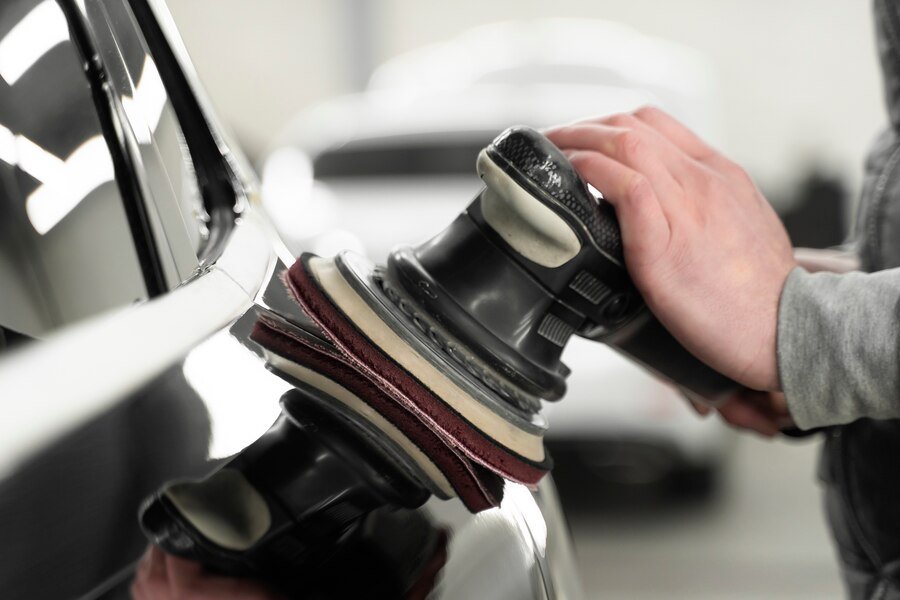
- Paint Correction: This is arguably the most critical step. Machine polishing is performed to remove existing swirl marks, light scratches, oxidation, and other imperfections in the clear coat. The ceramic coating, being a transparent layer, will magnify any flaws beneath it, so a flawless base is essential for a perfect finish. This step can take many hours.
- Panel Prep Wipe Down: Once polishing is complete, the entire painted surface is wiped down with a panel prep solution or isopropyl alcohol (IPA) mixture. This removes all polishing oils, waxes, and residues, ensuring the bare clear coat is exposed for the ceramic coating to bond effectively.
- Coating Application: The ceramic coating liquid is applied one small section at a time, typically using a suede applicator cloth wrapped around a foam block. It's often done indoors in a climate-controlled environment to prevent premature curing.
- Leveling: Immediately after applying, the excess material is "leveled" or buffed away with clean, high-quality microfiber towels. This ensures a uniform, thin film is left behind and prevents high spots or streaks from forming as the coating cures.
- Curing Period: The newly coated vehicle requires a minimum 12-24 hour curing period in a climate-controlled environment, protected from moisture and contaminants. This allows the coating to fully polymerize and bond with the paint. It's often recommended to avoid washing the vehicle or exposing it to harsh chemicals for 5-7 days for complete hardening.
Lifespan & Longevity
The durability of automotive ceramic coatings varies significantly based on product quality, the number of layers applied, environmental exposure, and proper maintenance. Professional-grade coatings typically offer a lifespan of three to seven years, sometimes even longer for high-end formulations. DIY coatings generally last 1-3 years.
The Underlying Technology: How All Ceramic Coatings Work
Whether we're talking about protecting an aircraft engine or a luxury sedan, the fundamental science behind how ceramic coatings achieve their impressive properties shares common threads.
Bonding for Strength
The effectiveness of any ceramic coating hinges on its ability to form a strong, lasting bond with the substrate.
- Chemical Bonding (Covalent): In automotive ceramic coatings, the SiO2 molecules form covalent bonds directly with the silicon dioxide present in the clear coat of your vehicle's paint. This creates a chemical union, making the coating a semi-permanent part of the surface rather than just a superficial layer. This is why it lasts so much longer than a wax.
- Physical and Mechanical Adhesion: Industrial coatings, especially those applied via thermal spray, rely heavily on strong physical and mechanical adhesion. The molten ceramic particles hit the prepared, often roughened, substrate and interlock with its surface irregularities as they solidify. Chemical reactions and diffusion bonding at the interface can also contribute to this incredibly strong bond.
The "Ceramic" Properties at Work
The materials themselves impart the coating's protective qualities:
- High Hardness: Ceramic materials are inherently hard. This means they are highly resistant to scratching, abrasion, and wear. For industrial applications, this translates to longer component life in abrasive environments. For automotive, it means significantly improved resistance to swirl marks and minor scratches compared to unprotected paint.
- Chemical Inertness: Ceramics are generally unreactive. This chemical stability makes the coatings highly resistant to a wide range of corrosive substances, from industrial acids and bases to everyday environmental contaminants like acid rain and bird droppings.
- Thermal Stability: The high melting points and stable molecular structures of ceramic materials allow them to withstand extreme temperatures without degrading. This is critical for industrial components in high-heat applications.
Surface Tension & Repulsion: The Hydrophobic Effect
For automotive coatings, the hydrophobic effect is a key benefit. This is achieved by creating an extremely smooth, low-surface-energy layer. Water molecules prefer to bond with each other rather than the coated surface, leading them to bead up into tight spheres that easily roll off, carrying dirt with them. This phenomenon also means contaminants have a harder time adhering to the surface, making cleaning much simpler.
Demystifying Common Ceramic Coating Questions
Given the diverse applications and technical nature, it's easy for misconceptions to arise. Let's clear up some common questions:
- Is ceramic coating just for cars? Absolutely not. While automotive detailing popularized the term for many, industrial applications of ceramic coatings predate and far exceed the volume of consumer automotive coatings. From aerospace to medical implants, ceramic coatings are fundamental to many high-performance technologies.
- Is it scratch-proof? No. This is a common and dangerous misconception. Automotive ceramic coatings are highly scratch-resistant due to their increased hardness, but they are not impervious. Enough force or a sharp enough object will still scratch them and the paint underneath. Think of it as an extra, very tough layer of defense, not a bulletproof shield.
- Does it replace Paint Protection Film (PPF)? No, they serve different purposes. PPF is a thick, clear urethane film designed to absorb impacts from rock chips and significant abrasions. Ceramic coatings are a thin, hard layer primarily for chemical resistance, UV protection, and ease of cleaning. They can, however, be applied over PPF for enhanced gloss and easier cleaning of the film itself.
- Can I apply it myself? Yes, DIY ceramic coating kits are widely available. However, achieving professional-grade results requires meticulous surface preparation (especially paint correction), a controlled environment, and precise application techniques. Without these, you risk uneven application, high spots, and premature failure.
- How long does it last? This varies greatly. Industrial coatings can last for decades depending on the environment. Automotive coatings range from 1-3 years for DIY products to 3-7+ years for professional applications, depending on product quality, application, and maintenance.
- Does it need maintenance? Yes! A ceramic coating is not a "set it and forget it" solution. Proper maintenance—using pH-neutral soaps, avoiding harsh chemicals, and regular gentle washing—is crucial to ensure its longevity and hydrophobic properties. Periodic "booster" products can also help maintain its performance.
Making the Right Choice: What to Consider
Deciding on a ceramic coating depends entirely on your specific needs and application.
For Industrial Needs: Precision and Performance
If you're looking for industrial applications, the decision criteria are highly technical:
- Specific Environmental Demands: What are the operating temperatures? What chemicals will be present? What type and level of wear or friction is expected?
- Component Material: The substrate's composition will influence coating compatibility and bonding.
- Desired Performance Metrics: Are you aiming for increased lifespan, improved efficiency, or thermal management?
- Application Method Suitability: Some geometries are better suited for CVD, others for thermal spray.
This typically involves consultation with materials engineers and specialized coating service providers to design a bespoke solution.
For Your Vehicle: Protection and Aesthetics
For automotive enthusiasts or those simply wanting better car protection, your considerations will be different:
- DIY vs. Professional Application:
- DIY: Lower upfront cost, but requires significant time, effort, and skill for proper surface prep. Results may vary.
- Professional: Higher cost, but guarantees expert paint correction, controlled application environment, and often, a warranty. Typically yields superior, longer-lasting results.
- Desired Longevity: How many years of protection are you looking for? This will influence the product quality and cost.
- Paint Condition: If your paint has significant swirl marks or oxidation, professional paint correction is almost always a prerequisite for a truly brilliant and long-lasting ceramic coating.
- Maintenance Commitment: Are you prepared to follow specific washing and maintenance protocols to maximize the coating's life and performance? If you prefer automated car washes and harsh soaps, a coating might not be the best investment.
Beyond Application: Nurturing Your Coated Surfaces
Regardless of whether it's an industrial component or your car, a ceramic coating performs best with appropriate care. While industrial coatings are often designed to be maintenance-free in their specific environments, automotive coatings require ongoing attention.
For your vehicle, proper post-application maintenance is key to maximizing the lifespan and performance of your ceramic coating:
- Regular, Gentle Washing: Use the "two-bucket method" with a high-quality, pH-neutral car soap. This minimizes swirl marks and prevents dirt from being reapplied to the paint.
- Avoid Harsh Chemicals: Steer clear of automatic car washes with aggressive brushes, strong degreasers, or abrasive polishes, as these can degrade the coating.
- Prompt Contaminant Removal: Don't let bird droppings, bug guts, or tree sap sit on the surface for extended periods, even with a coating. Clean them off gently as soon as possible.
- Consider "Booster" Products: Many ceramic coating brands offer spray sealants or "boosters" designed to periodically rejuvenate the coating's hydrophobic properties and add an extra layer of protection against light contaminants.
The Future is Ceramic: Evolving Protection
The technology of ceramic coatings continues to evolve at a rapid pace. Researchers are constantly developing new materials, improving application techniques, and expanding their use into novel fields. We're seeing advancements in self-healing ceramics, multi-layered systems, and coatings with integrated smart features. From enhanced thermal barriers for space exploration to biocompatible coatings for medical implants and even more durable, environmentally friendly options for everyday consumer goods, the future of ceramic coating technology promises even greater levels of protection and performance across an ever-widening spectrum of applications.
Your Next Step: Understanding and Investing Wisely
Ceramic coatings are a testament to the power of material science, offering unparalleled protection and performance across a vast array of applications. Whether you're an engineer designing the next generation of industrial machinery or a car owner seeking the ultimate paint protection, understanding what ceramic coating truly is—and how its underlying technology works—empowers you to make informed decisions. It's an investment in longevity, efficiency, and a superior finish, ensuring your assets are shielded by some of the most advanced materials known to science.